Milling Around

“Little by little, one travels far…” – J. R. R. Tolkien

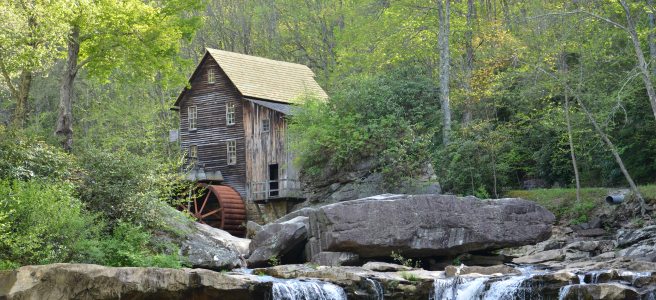
Yes, there was still one more stop to make on our Fayette County adventure before heading home. We headed back North on Route 19 and took the familiar exit heading East on Route 60, enjoying the air conditioning as we rode down the two-lane highway. The 25 minute drive flew by, and before we knew it, we were at the turn off (which, despite being a familiar place, we still nearly missed – thank goodness for signage). I couldn’t wait to see this photogenic spot and hear the babble of the water running over the rocks below the Glade Creek Grist Mill at Babcock State Park.

Although our last trip to Babcock had only been a year and one month prior, the scenery was transformed from what I had remembered. It never ceases to amaze me the difference in foliage between the month of April and the month of May. During our last visit, most of the trees had been bare; this time, they were bursting with green. While some people who come to West Virginia from out of state complain that the rolling hills can be too green to handle and that the amount of trees can make them feel claustrophobic, I honestly can’t get enough of them. It’s like being wrapped in an emerald blanket, embraced by nature.

Babcock State Park Grist Mill

The grist mill is another one of the most photographed places in West Virginia. I actually had several photos of it pinned to my exploration board on Pinterest long before I made plans to move to the Mountain State. The photos of the fall foliage are breathtaking.

Babcock State Park Grist Mill5

Unfortunately, the water wheel at the mill wasn’t turning, but that did not take away from its charm. The Glade Creek Grist Mill was built in 1976 and is still in use today. Visitors can purchase freshly ground cornmeal at the mill and visitor’s center, depending on availability and stream conditions. The mill was actually constructed from parts and pieces of three different mills that once stood in West Virginia. According to the Babcock State Park website, “The basic structure of the mill came from the Stoney Creek Grist Mill which dates back to 1890. It was dismantled and moved piece by piece to Babcock from a spot near Campbelltown in Pocahontas County. After an accidental fire destroyed the Spring Run Grist Mill near Petersburg, Grant County, only the overshot water wheel could be salvaged. Other parts for the mill came from the Onego Grist Mill near Seneca Rocks in Pendleton County.”

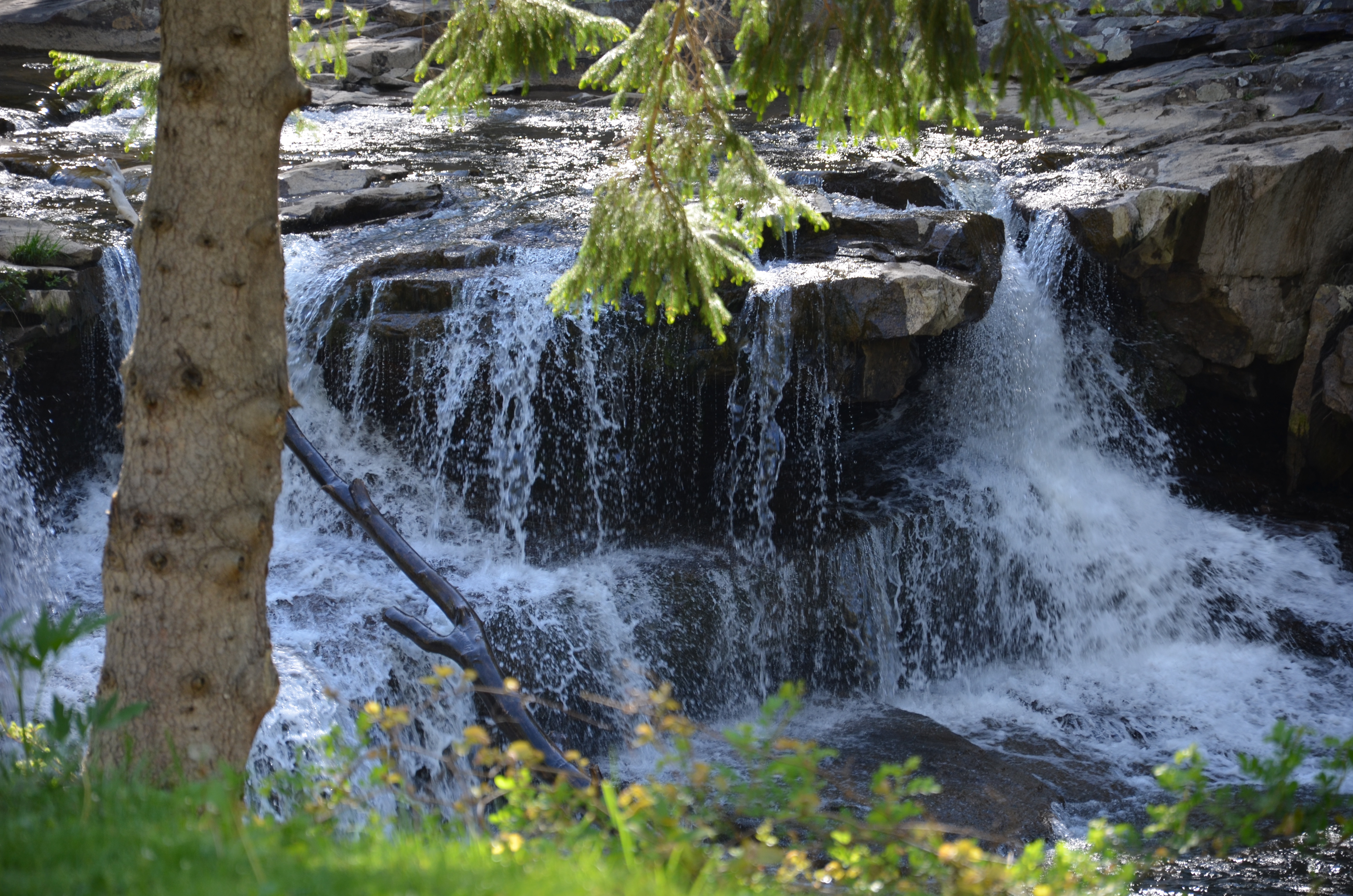
Downstream from the mill is a beautiful waterfall, along with plenty of flat areas for fishermen to cast their lines.
Babcock State Park

After enjoying the soothing sounds of the water, we decided it was time to head home. I could not have asked for a better end to a perfect day.
New River, New Adventure

“He who seeks beauty will find it.” – Bill Cunningham

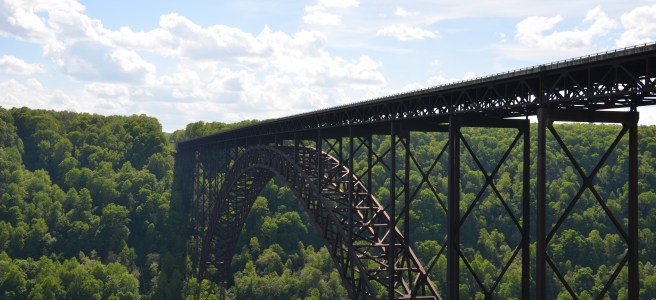
When we jumped in the car and headed out of Fayetteville, I thought I knew exactly where we would go next. We would head back North and get off on the Route 60 exit and head to a familiar spot. But, as we turned back onto Route 19, a new plan sprung up in my mind. One of the most beautiful landmarks in West Virginia was about to be under our wheels, and despite having lived in the Mountain State for nearly three years, I had yet to stop and see it. So we pulled off quickly to the visitor’s center and overlook at the New River Gorge Bridge.

The bridge is easily one of the most photographed landmarks in the state and even appears on the back of the West Virginia state quarter. It was also mentioned in an episode of the Fox show Bones, and the year I moved here, there was a showcase on The Price is Right that offered a trip to see the bridge from the New River on a jet boat (I mistakenly thought the bridge was new and called it the River Gorge Bridge when I told my friends about seeing the prize package, which elicited quite a few laughs). That day, a trip to see the New River Gorge Bridge in person was added to my bucket list.

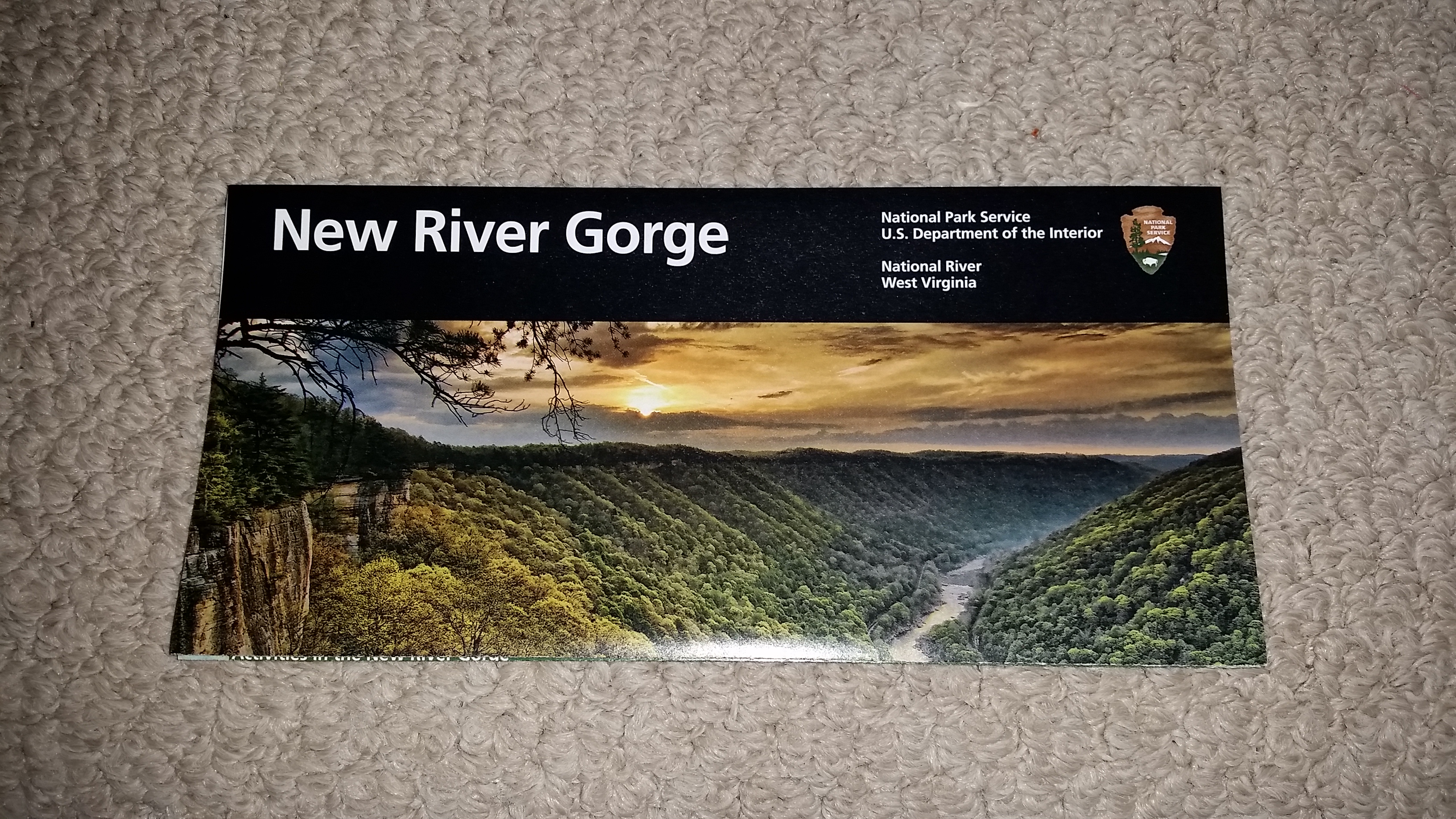
New River Gorge BrochureI wanted to hit the visitor’s center first, which I blame on my inquisitive nature. I wanted to see the informational displays and understand just how much it took to build this landmark. I quickly learned that the bridge was not nearly as old as I thought it was. The first piece of steel was positioned above the gorge in 1974, and construction of the bridge wasn’t completed until 1977. Prior to the construction of the bridge, drivers had to travel narrow, winding roads down into the gorge, across a small bridge above the New River, and back up the other side of the mountain, which took about 40 minutes. Now, travel takes less than a minute.

But just because the travel time is faster doesn’t mean that the New River Gorge Bridge should go unseen. It is the largest steel span in the western hemisphere and the third highest in the United States. The bridge was added to the National Register of Historic Places in 2013 by the National Park Service. If that wasn’t enough, the New River itself is one of the oldest rivers in North America, and some believe it to be one of the oldest in the world, second only to the Nile River in Egypt.

In addition to a wealth of information on the bridge and the New River, the visitor’s center also offers beautiful views of the river.

New River Gorge1          New River Gorge 5

After taking in the scene, I was ready to head to the overlook. Of course, I couldn’t resist snapping a few quick pictures of passing scenery on our way there…

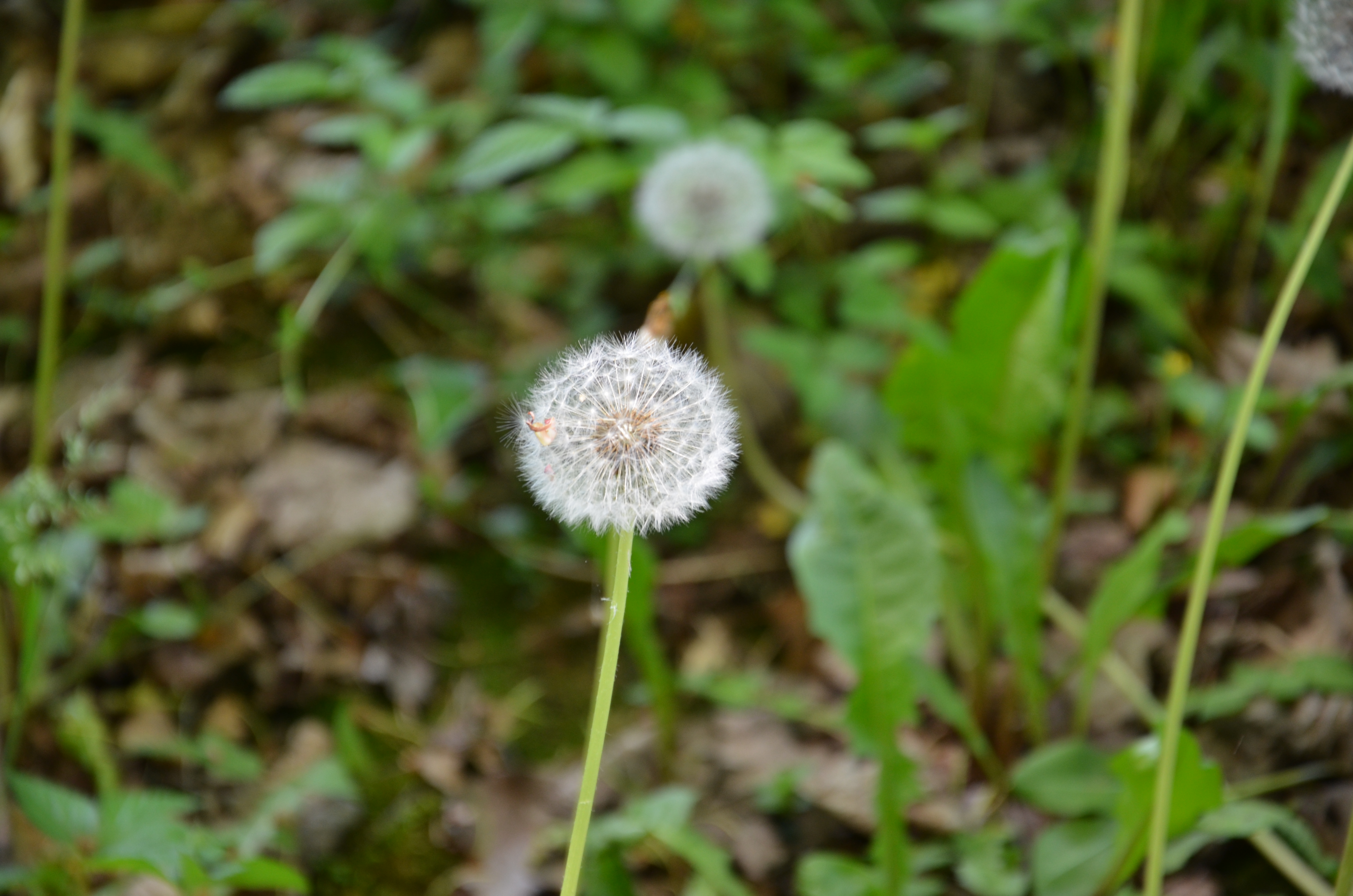
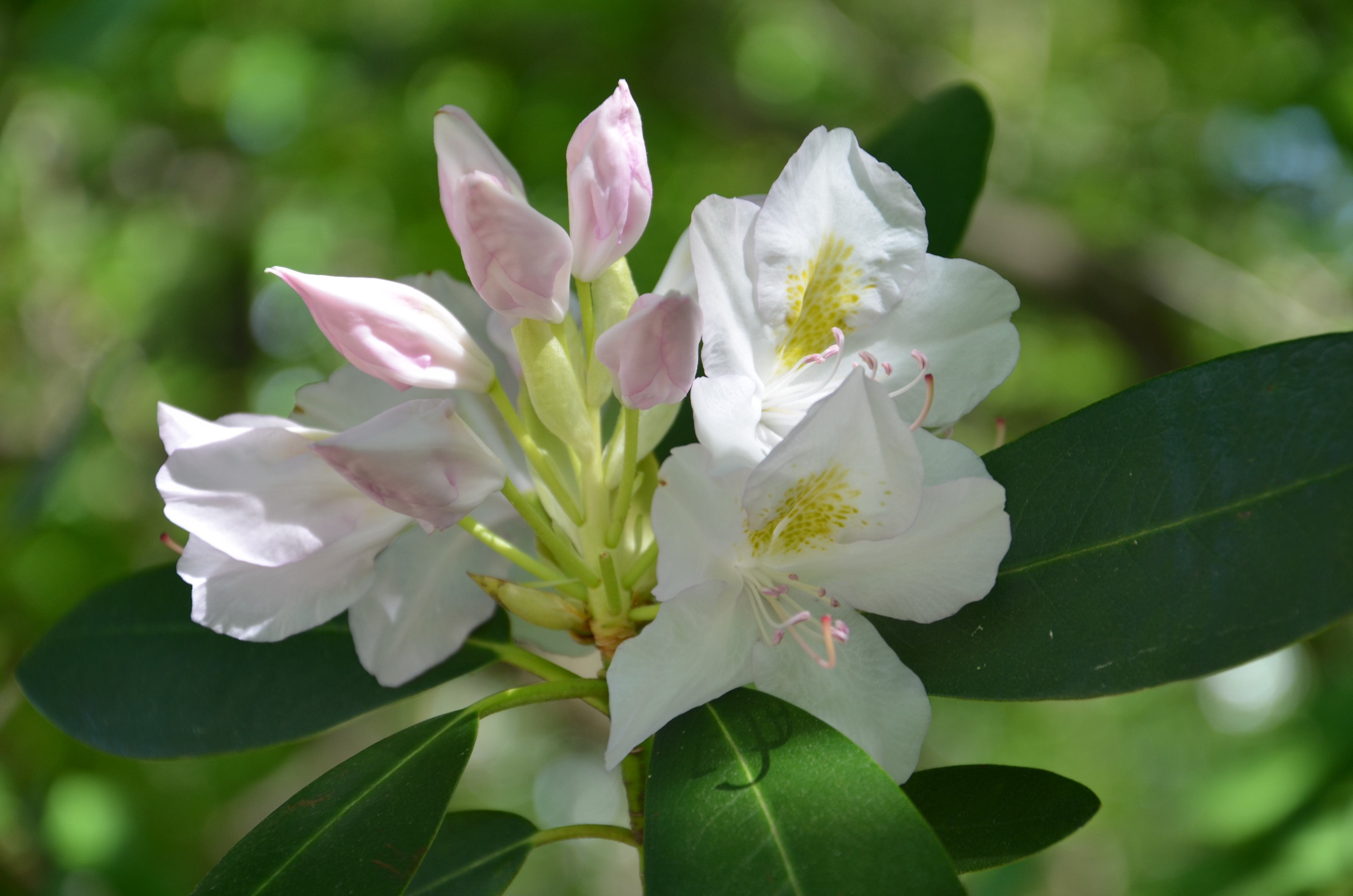
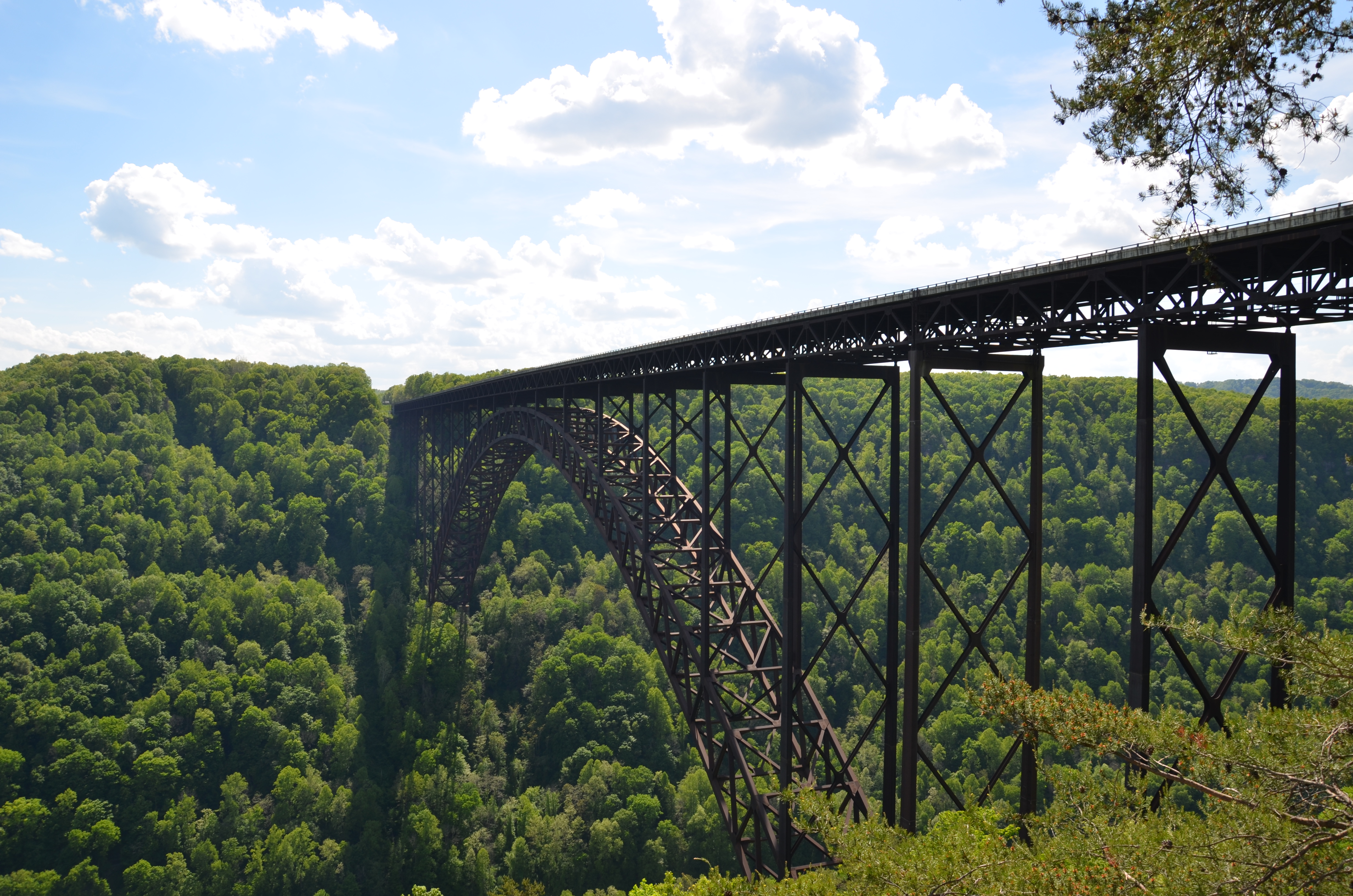
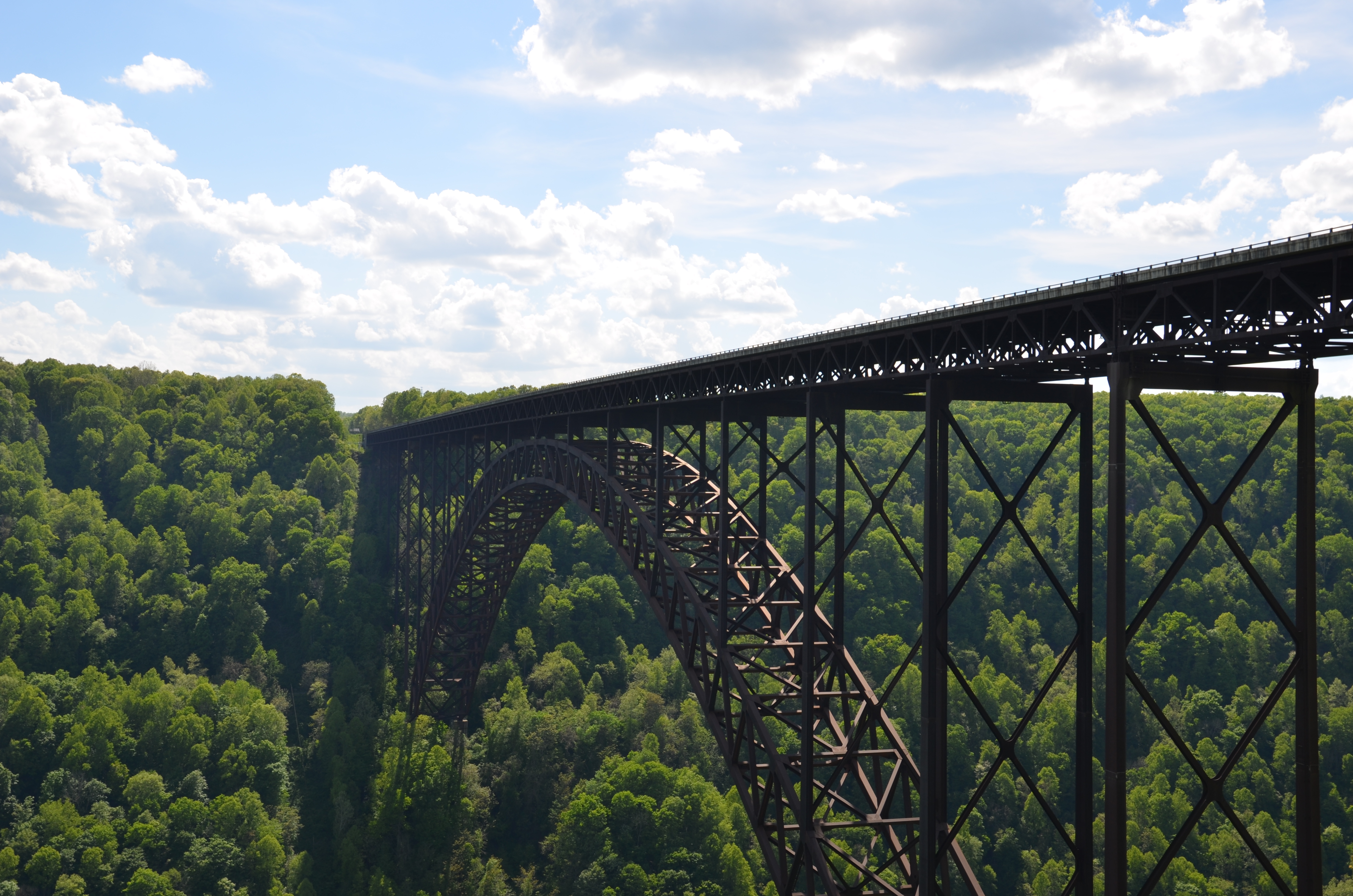
Catterpillar 4           DandelionRhododendronAnd once we finally made it to the overlook, I was far from disappointed. There’s nothing like looking at a huge structure, built by hardworking human hands, to make you feel small. I mean this in the best way, of course. It reminded me that I am a small part of the universe, but I am still lucky enough to be a part of it.

New River Gorge Bridge           New River Gorge Bridge4New River Gorge Bridge10           New River Gorge 6Maybe one year I will come down for Bridge Day. I’ve heard that the traffic can be crazy, but I think the festivities would more than make up for that. However, this gal will not be BASE jumping or rappelling off that perfectly good bridge… I’ll just stick to seeing the amazing views and enjoying good music and food.

After climbing back out of the gorge, we stopped at the ice cream stand and gift shop near the visitor’s center for a quick, cold treat, then hit the road again. There was still one more stop we needed to make before heading home…

An Afternoon in Fayetteville

“The mountains are calling, and I must go.” – John Muir

The semester is over and final grades are back (cue a huge sigh of relief), and that means summer vacation has officially begun. With the sudden surge in free time, I have found myself dreaming of road tripping all across the Mountain State. There are several places on my bucket list, and it seems like more are added each day. Here’s just a small sample…

Brochures

With the lovely weather we had over the weekend, I decided it was time to cross a few places off the list. Rather than bombarding you with tons of pictures in a single post, consider this the first in a mini-series about some of the gems in Fayette County.

Fayetteville Sign

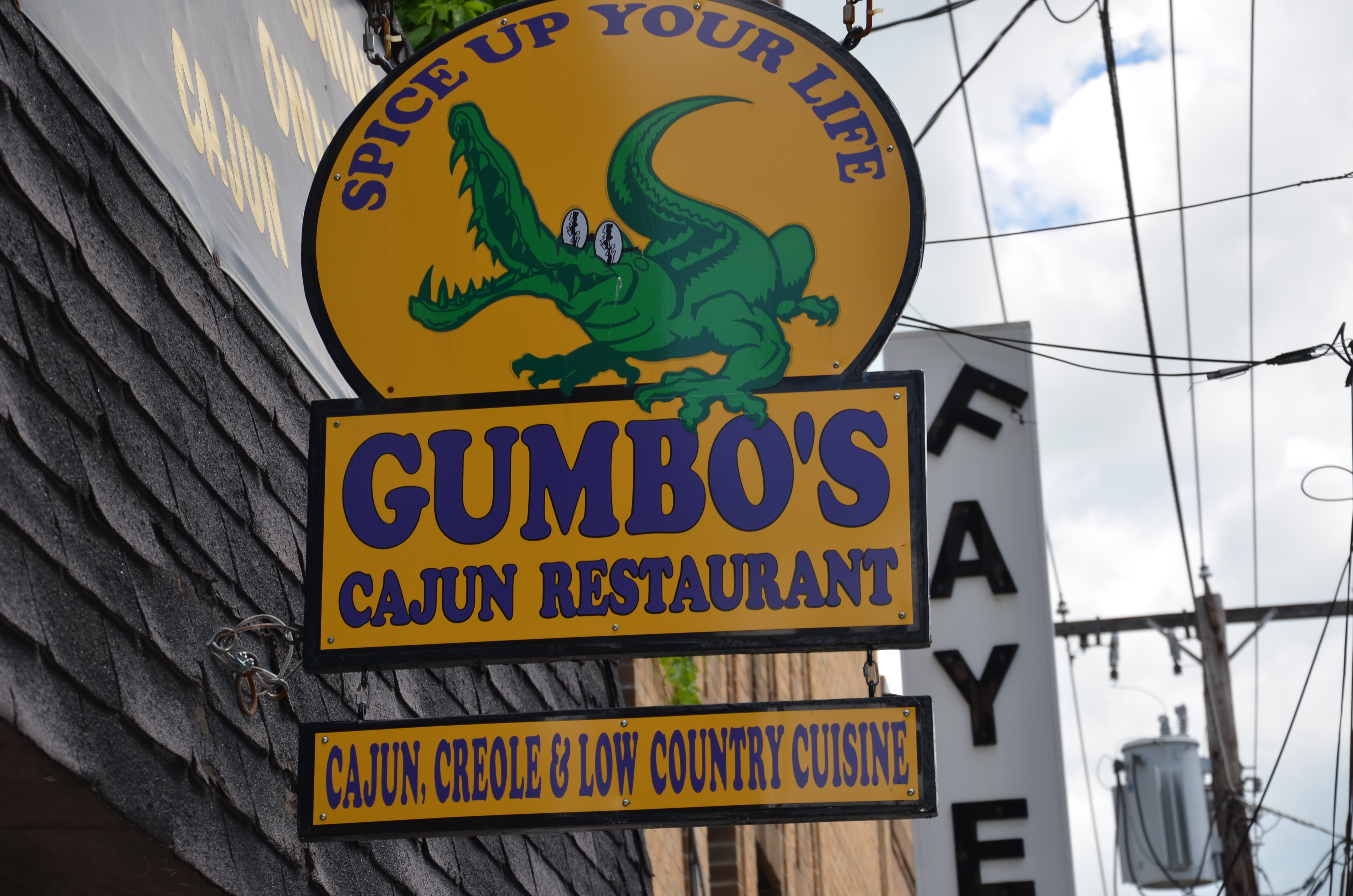
The adventure began in downtown Fayetteville with a delicious meal. I’ve stopped in Fayetteville a few times before, almost always to grab some delicious pizza from Pies & Pints Pizzeria (seriously, if you’re in the area, get some!). However, we wanted to try something different this time. At the recommendation of several of my friends who have grown up nestled among the hills, we made our first stop Gumbo’s Cajun Restaurant.

Fayetteville Gumbos     Fayetteville Gumbos Sign (2)

We were definitely not disappointed. The food was delicious, the prices were reasonable, and the service was fast and friendly. I decided to try the Crawfish Po’Boy Sandwich with homemade chips, and it was one of the best things I’ve ever tasted (sorry, Mom!). Every bite was gone before I even thought to snap a picture. They have some great shots of favorite menu items on their Facebook page though, so be sure to check them out.

One of the things I love most about Gumbo’s is their use of fresh, local ingredients. This time of year, their specials are centered around the ramps (also known as wild onions) and morel mushrooms that can be found growing across the state. It is wonderful to see local items showcased regularly and I always appreciate restaurants that carry items grown in West Virginia. Fresh ingredients paired with the tastes of New Orleans added up to a wonderful meal, and I am sure we will be back again.

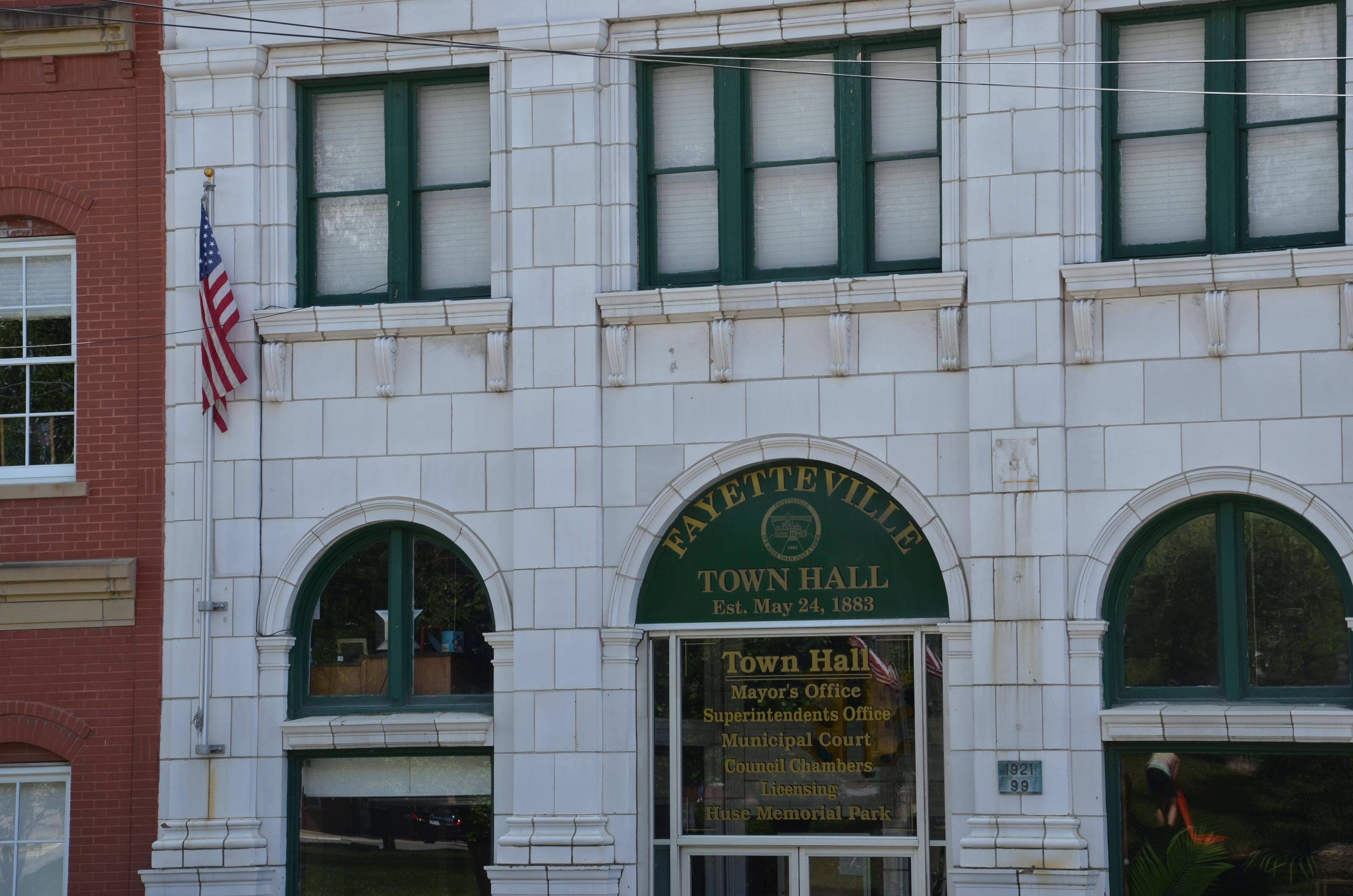
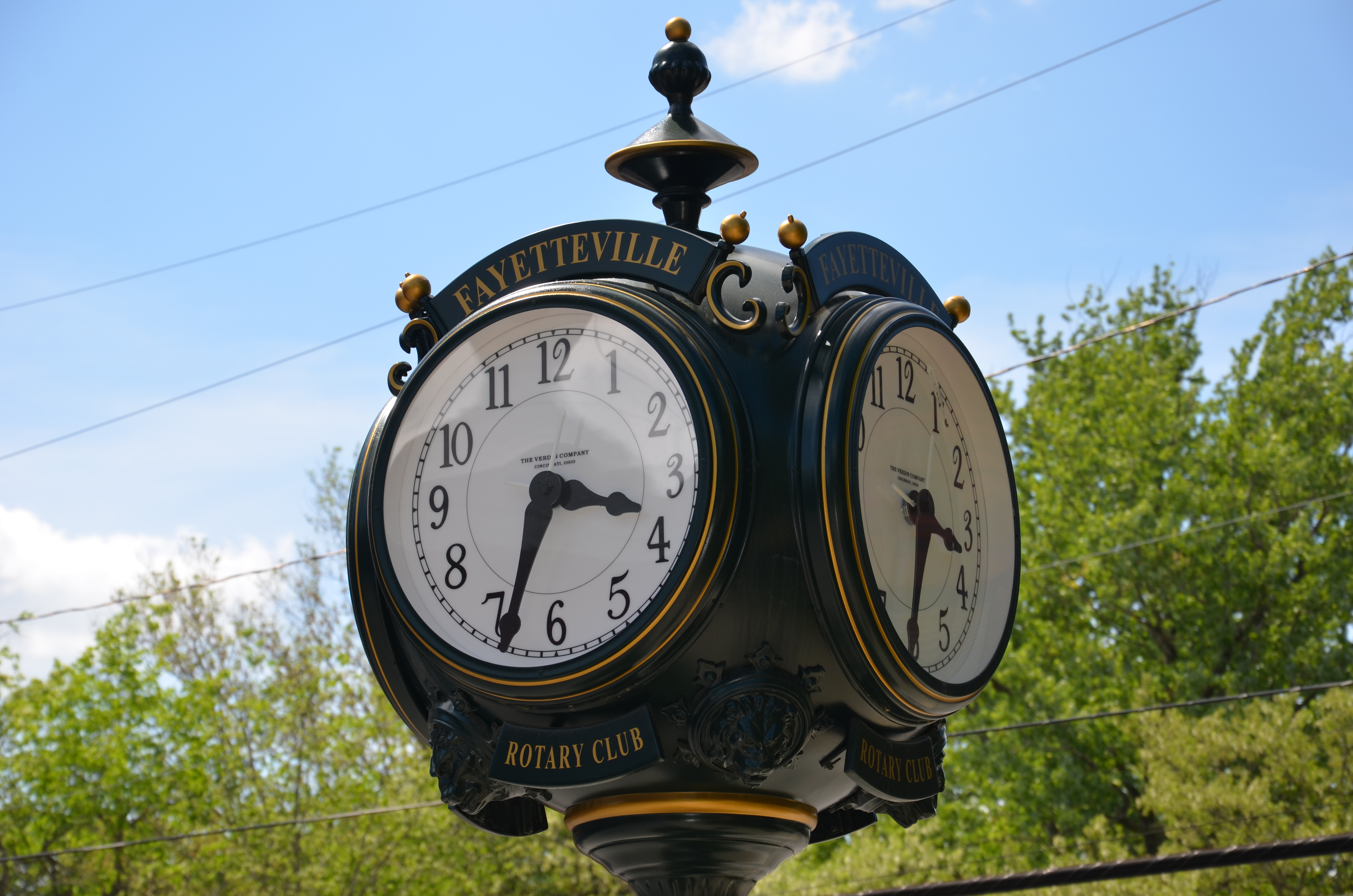
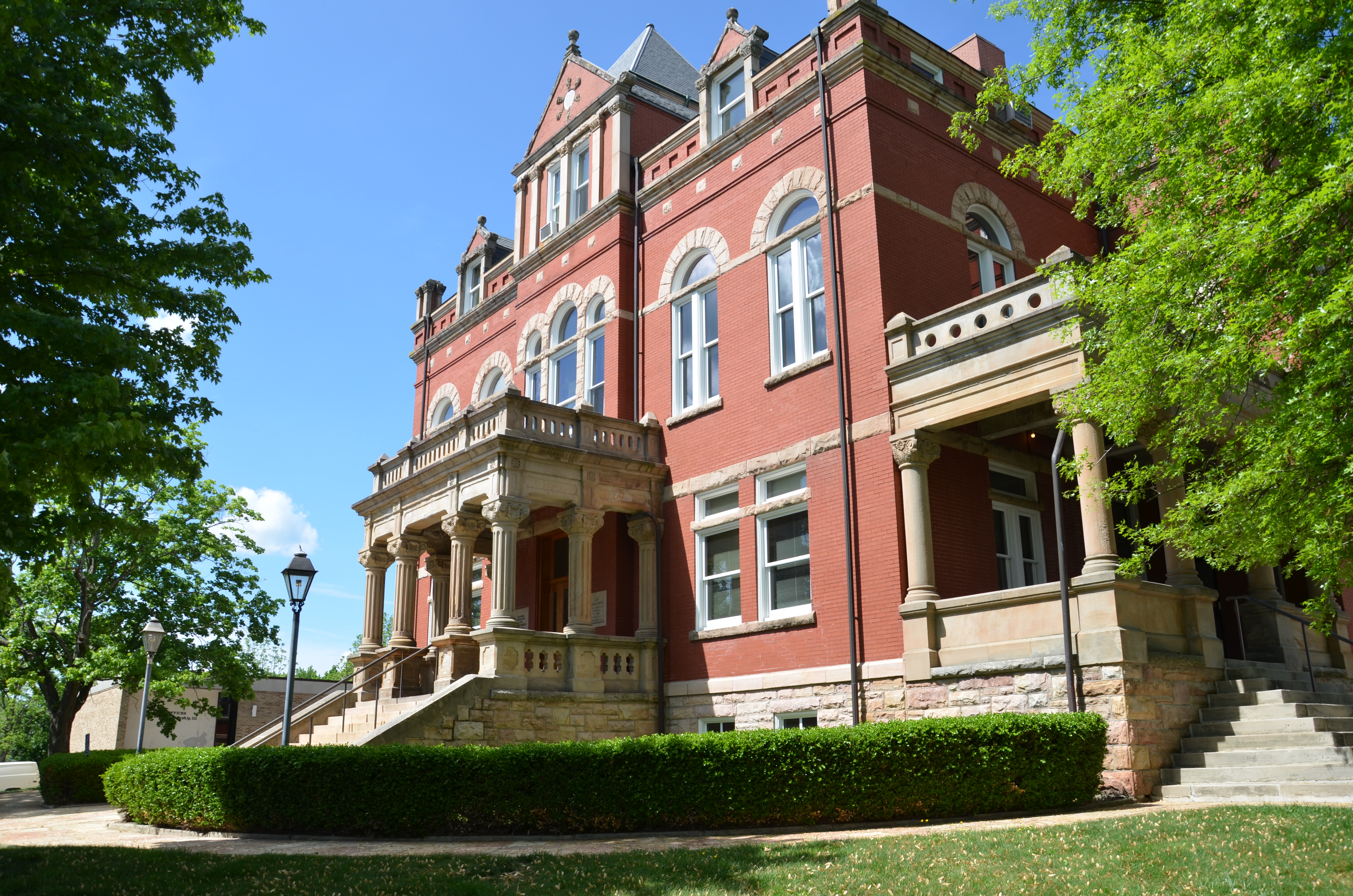
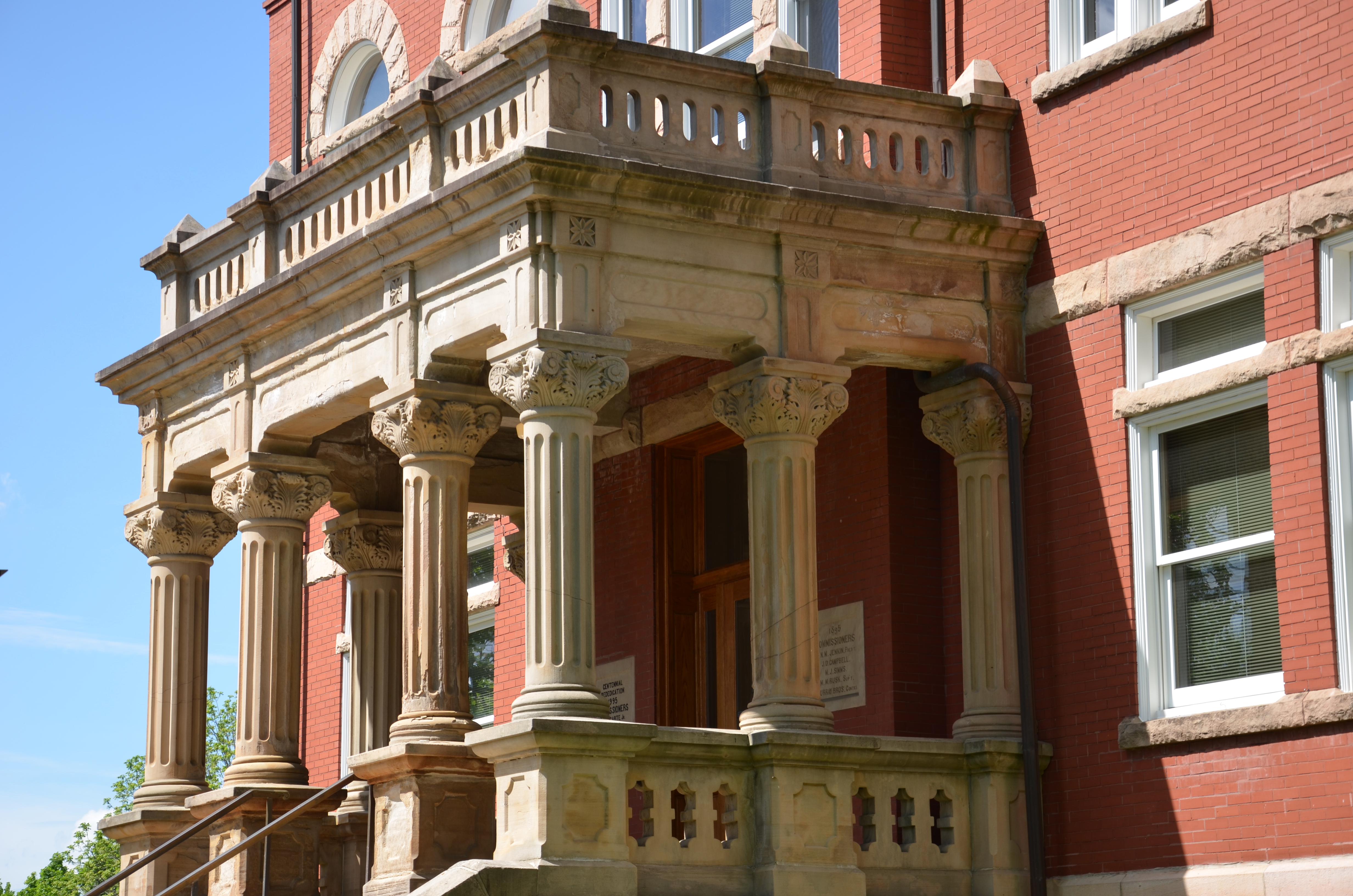
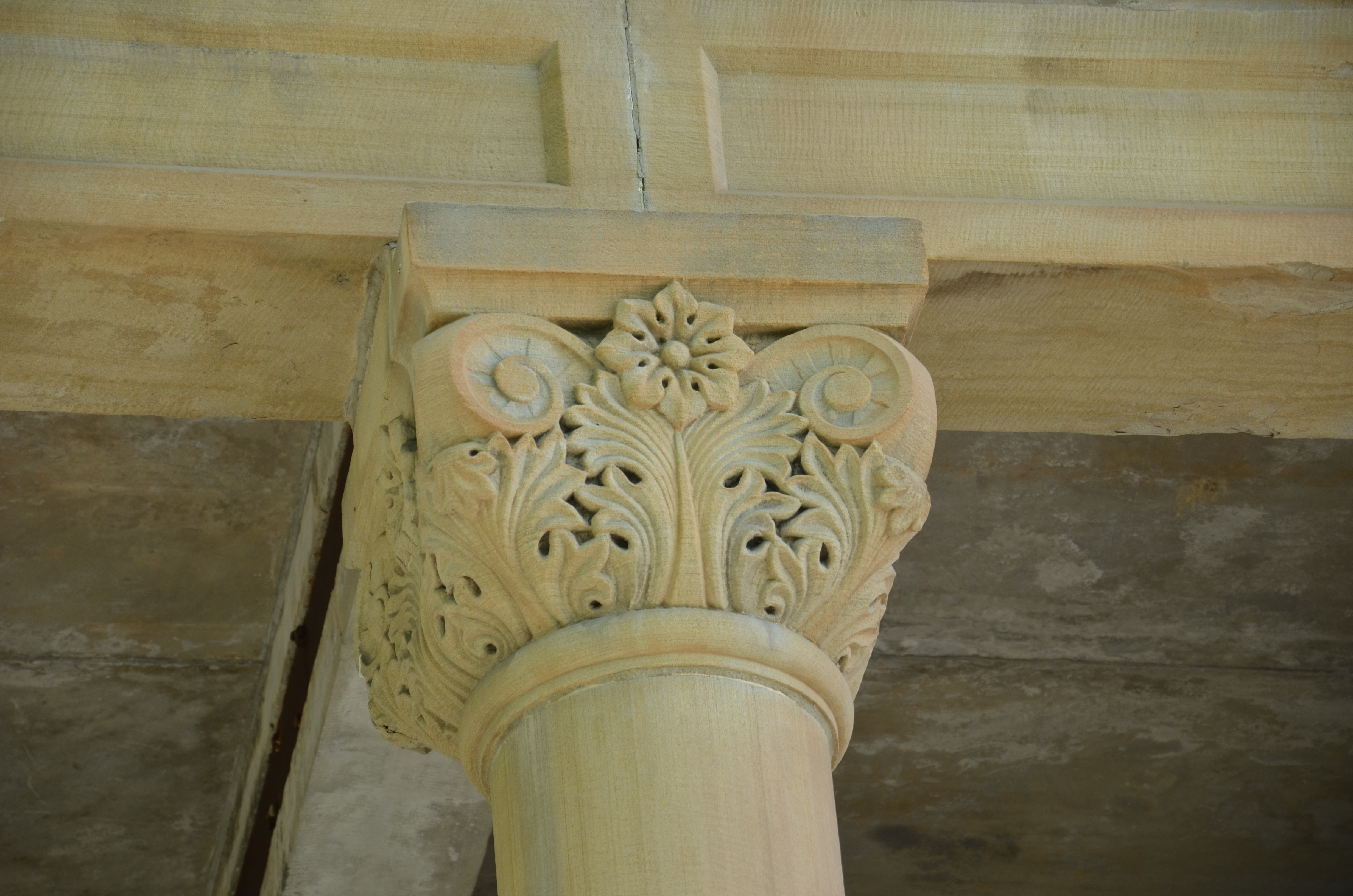
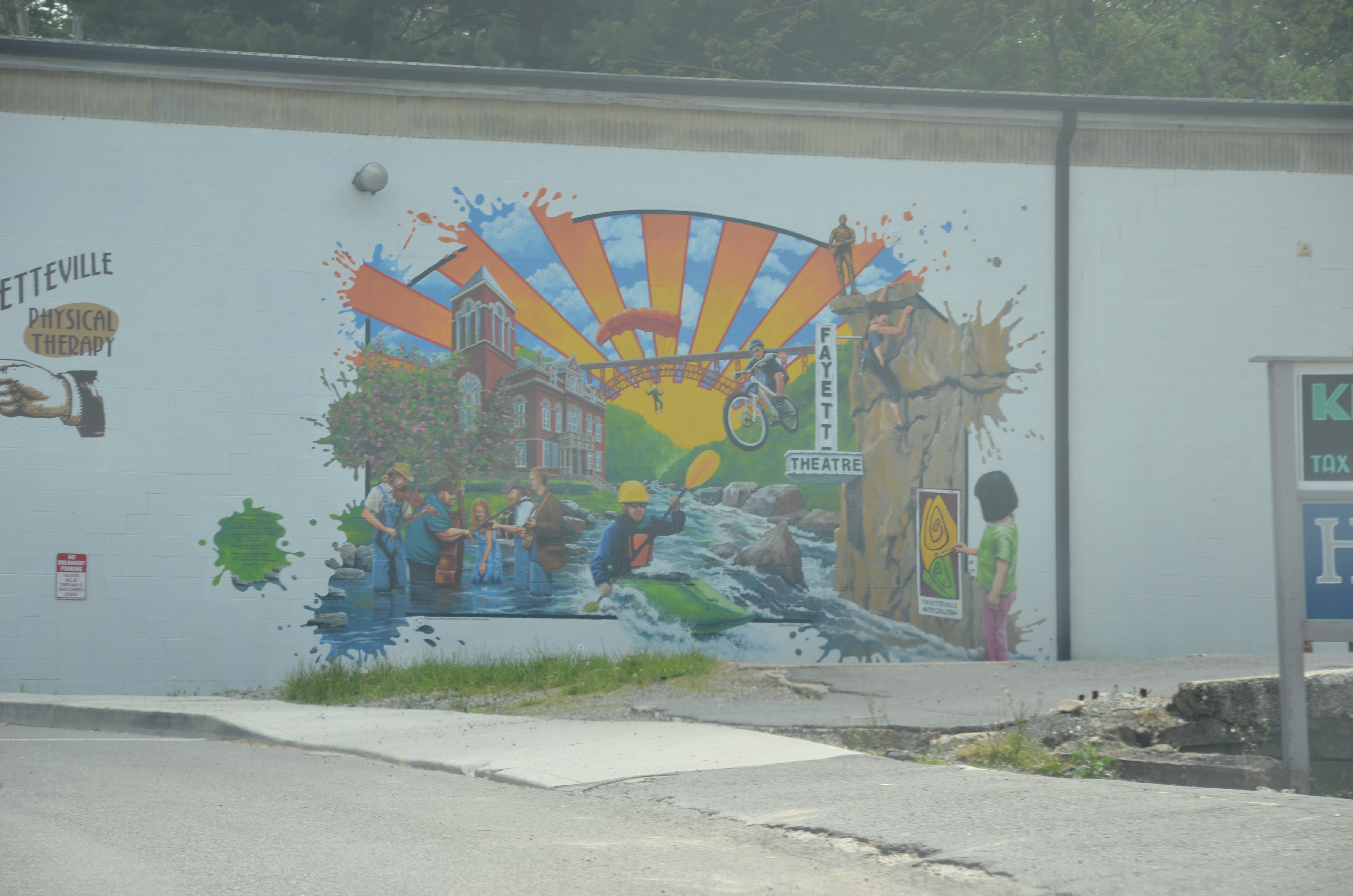
After getting stuffed to the gills, we decided to take a stroll around town. Fayetteville, like many of the other smaller towns in West Virginia, has held on to much of the older buildings in town and charm that accompanies them. I couldn’t resist snapping some pictures of the beautiful architecture…

Fayetteville Bank            Fayetteville Town HallFayetteville Clock            Fayetteville CourthouseFayetteville Courthouse Detail 2            Fayetteville Courthouse DetailFayetteville Mural

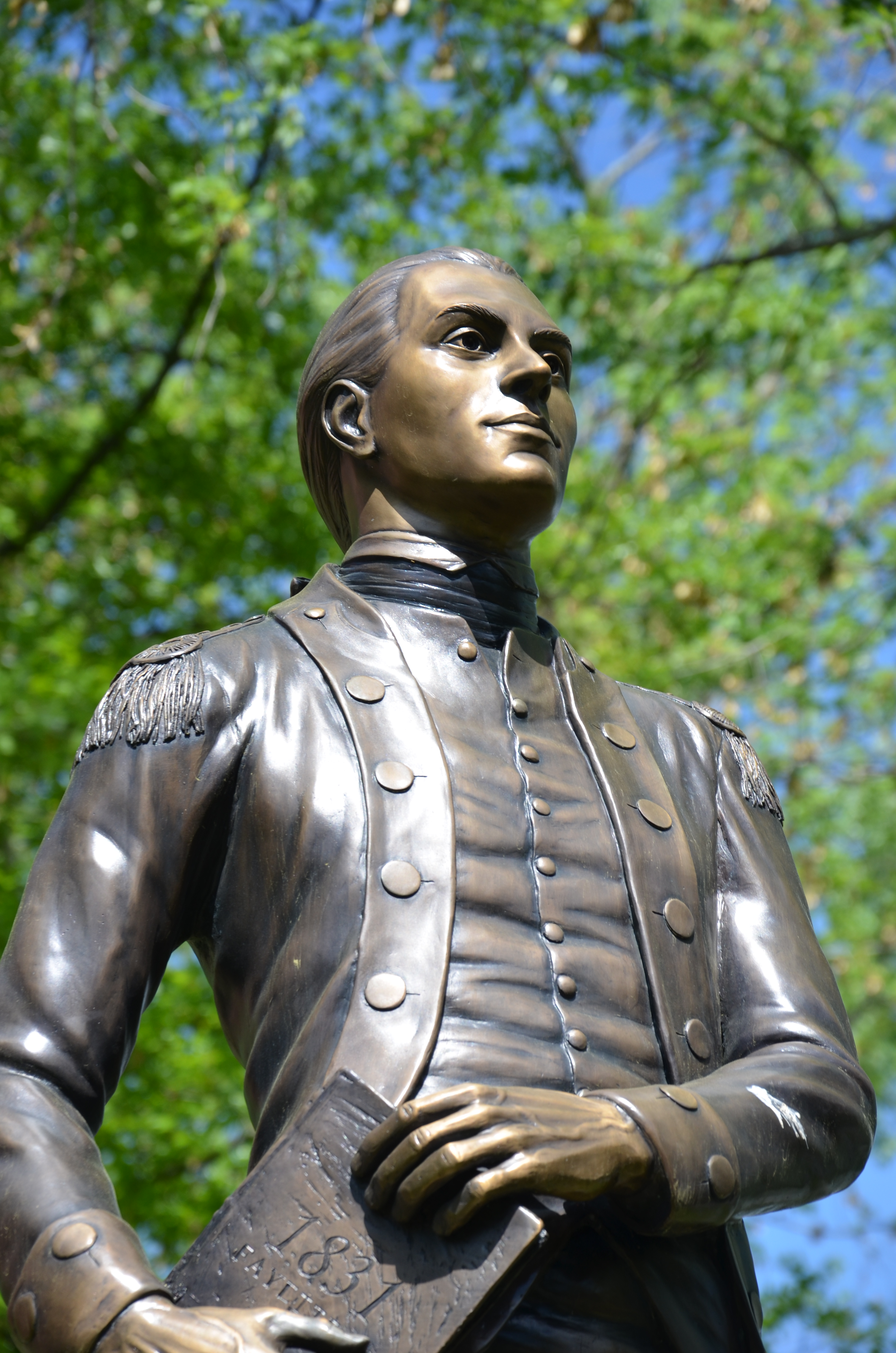
I also found a statue of Marquis de Lafayette, French Statesman during the American Revolution and the county’s namesake, in front of the courthouse.

Fayetteville Statue

According to the plate below the statue, it was petitioned before the General Assembly of Virginia in 1830 that the county be named Lafayette or Fayette in order to “perpetuate a remembrance of his virtues and philanthropy through future ages of our political existence…” To put that staying power in perspective, that petition was drawn up 33 years before West Virginia seceded from the Confederacy to rejoin the Union during the Civil War. Now, 185 years later, the county still bears his name.

Fayetteville Statue Detail

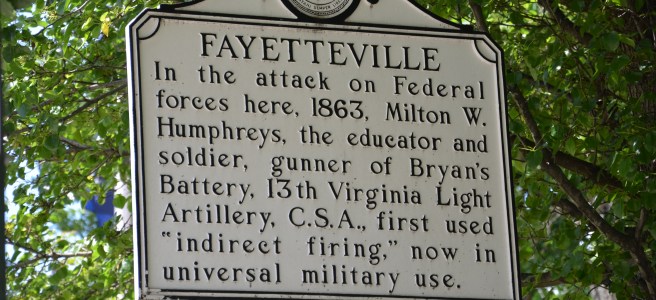
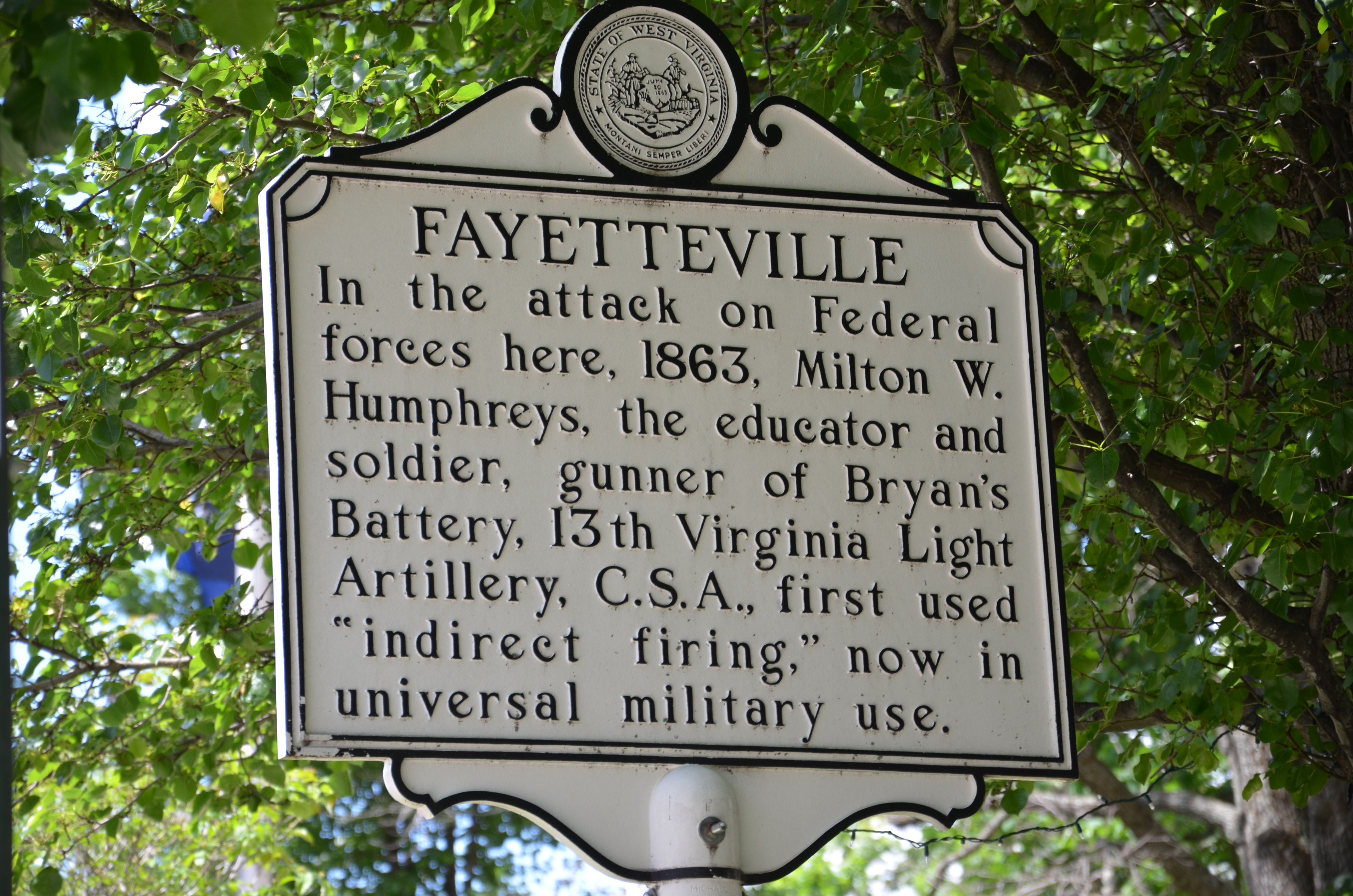
In addition, I found one of the many white highway historical markers on the courthouse lawn, offering information about the Civil War in Fayette County.

Fayetteville Historical Sign

The West Virginia Highway Historical Marker Program was initiated in 1937 as a way to encourage tourism to the state during the Great Depression (part of Roosevelt’s New Deal). These markers appear in places all over the state, with approximately 1,000 markers altogether. For more information on the West Virginia Highway Historical Marker Program, visit the West Virginia Division of Culture and History website.

Soon it was time to hop back into the car and head to the next stop on our adventure, one of Fayette County’s (and the mountain state’s) most famous landmarks…

The White Deer

“the deer are running… the thud of their hooves/on the bed of the stream/is the drum that rocks/the roots of the birch/and the wind that shakes/the birch tree’s leaves…” – “Deer,” Chris Powici

I have never seriously considered becoming a hunter. It is simply not in me to take the life of another creature for sport. Now, before I dig myself into a hole here, let me explain. I have no problem with the practice of hunting, especially for food, and I certainly take no issue with those who hunt, whether for pleasure or survival. I have even gone on hunts with friends and I enjoyed watching them. I just have no desire to hold the gun or pull the trigger.

This sets me somewhat outside of the culture here. Sure, not everyone in West Virginia hunts, but hunting is still a big deal. There is turkey season, bear season, squirrel season, and even rabbit season, each with its own schedule and rules set forth by the Division of Natural Resources. However, out here, deer is king. Rifle deer season begins the fourth Monday in November and lasts for two weeks. County schools give the first week of deer season off, as it also happens to be the week of Thanksgiving. During those two weeks, social media becomes loaded with pictures of bucks and does of all sizes and aside from the holiday, the woods are often echoing with gunshots.

I’ve never participated in deer season. I’ve considered asking friends to let me accompany them, but in the end, I always have too many other obligations. Besides, I don’t own the proper gear to sit in the cold all day long, and as much as I love the outdoors, I don’t want to turn into an ice sculpture. But last week, just for a few minutes, I became a deer hunter.

It was just around 8:45 PM when I made it back to town from night class. It was getting darker every second, and at first, all I could see was a dark shape move out across the road. My headlights illuminated the eyes and I realized that it was a deer. This was the first I’d seen at night since the cold struck in late January, so I was slightly shocked. As is my nature, I stopped to watch her cross the road onto the grassy banks of the river. Just as I began to accelerate again, I saw it out of the corner of my eye – a bright, white dog in the middle of the small herd of deer.

No, not dog… It was too large. I realized I was looking at a white deer. And just as that realization hit me, the herd began moving on out of sight. Before I could stop myself, I turned the car onto the street parallel to the river and followed them. I had to get closer, had to be sure I was really seeing it and not imagining it.

As I inched along slowly, I saw her again moving along the sloped embankment. Even from a distance she seemed huge, almost the size of the fourteen-hand mare we had growing up. The moonlight made her appear to glow in the dark, almost spirit-like, her white fur cast in a bluish glow. I tried to no avail to get a picture of her, only managing to get a grainy cell phone image before she disappeared over the embankment, vanishing as quickly and quietly as she came.

As I sat there silently cursing myself for not having my Nikon in the car with me, it dawned on me that this must be what hunting is like. The initial shock of seeing one’s prey, the thrill of the chase, the missed shot – it was like nothing I’d ever experienced before. I wanted so badly to have some tangible proof of her existence, something I could so the world so that they could maybe have the chance to experience the wonder I felt at her presence. I’ve heard too often that deer are vermin that destroy lawns and gardens, along with cars when they jump across the highway, and that life would be better without them. I can say for sure not that the latter part of that statement is not true, and I am certain the other hunters out there would agree with me.

I can only hope that I will be lucky enough to see her again, and maybe I will be fortunate enough to have my camera beside me next time. Until then, the white deer will haunt my memory. Just like the others who stake out the woods with their game cameras and those who curse under their breath when their aim is off, I now have my own story to tell about the one that got away.

whitedeer.jpg

Wanderlust

Wanderlust [wandərlʌst] – noun; A strong, innate desire to rove or travel about.

I’ve never been one to be too sappy about my heritage. Don’t get me wrong, I am proud of my background; my mother’s side of the family came from Germany while my father’s side is a mixture of Western European backgrounds, including Italian, Scottish, and Irish. However, being a third-generation American, I tend to define myself as simply a citizen of the United States. That being said, this word upon which I have based my blog comes from my European heritage and it immediately spoke to me. Wanderlust is a word that has been borrowed directly from the German Wanderlust, which means literally “wander desire.” When I first heard and understood it, I felt as though I had found a piece of the puzzle of my soul that had been missing for a long time.

You see, I could not think of a better way to describe how a girl raised in a southern Arizona metropolitan area would wind up nestled in the middle of the West Virginia hills than wanderlust. Arizona, while being the place I grew up, was never a place that I intended to stay. Growing up, I dreamed of traveling the globe. I traveled to countless landmarks, museums, and national parks, most often during the middle of my summer vacation in the backseat of my parents’ minivan. My mom and I made the pilgrimage to her small hometown of South Haven right along the coast of Lake Michigan every summer. By the time I reached the age of eighteen, I had already visited 23 of the 50 states, along with the District of Columbia, Victoria Island in Canada, and even stuck my toes across the border of Mexico.

Still, I wanted more. I wanted to see Seattle, New Orleans, Nashville, and New York City. I wanted to eat a lobster roll in Maine and see a sea turtle nest on the North Carolina dunes. I was itching to travel all across Europe and Asia – by boat, train, double-decker bus, subway, Chunnel, or even by foot. I dreamed of seeing Dublin, London, Paris, Pompeii, Amsterdam, Prague, Berlin, Athens, Moscow, Tokyo, and so many more. I longed to see the koala bears and kangaroos my parents told me stories about from the years they spent in Australia. I wanted to see it all and do it all, and I couldn’t see it or do it fast enough.

However, as the phrase goes, life happens. I never made it to Europe or Asia or Australia. I never got to feel the dense waters of the Black Sea or taste exotic cuisines. But my wanderlust has not been extinguished. Instead, I found the arrow of my compass pointing me in a different direction.

My journey to West Virginia (or, as I affectionately call it, my journey home) began when I visited for a week in 2009. My best friend was getting married, and she and her fiancé chose to be wed in his home county near where they would settle down together. It was the week leading up to Labor Day, and I don’t think I had ever seen so much green before in my life. I remember thinking to myself that only the rolling hills of Ireland could be a more perfect emerald hue than the holler I had found myself in. Immediately, I felt at home. The wind rustling through the trees, the babbling of the creek, the chirping of the birds and the frogs and the crickets formed a hypnotic melody, one that ensnared my heart and stayed with me for years afterward.

Fast forward to New Year’s Day, 2012. As life had continued to happen over that two and a half year period, Arizona had become even less of a home to me, and I found myself filled with a desire to leave the desert behind me for a while. On that snowy New Year’s Day, I arrived at Yeager Airport in Charleston, not sure what I expected to find but sure that I wouldn’t find it anywhere else. I spent two weeks in the holler my best friend and her husband lived in, and even though the winter scenery was a stark contrast to what I remembered, the feeling of belonging there among the mountains and the trees was exactly as I’d remembered it. I resolved then and there that I would find my way back to that place again; by that June, I had made West Virginia my home.

So why would I call this blog “West Virginia Wanderlust” if the mountain state is now my home? The answer is really quite simple – I still have that desire to rove and travel about. Despite being a resident for nearly three years, there are so many things I have yet to see right here in my own backyard. I, like so many others, still have much to learn about this beautiful place and the people who call it home. I plan to travel all over these mountains, learning about the land, the history, and the culture, and I hope that you will join me on the journey.